Omnichannel logistics with FIEGE
Your growth spans
many channels.Your logistics
connects them.
Stores, e-commerce and new sales channels need to work together in practice. Together, we align your stock, orders and processes with your growth.




















When your sales strategy moves forward
Growth creates opportunities.
And new demands.
New channel.
New requirements.
Different labels, packaging and delivery windows: an additional sales channel can quickly become a logistics project of its own.
Demand online.
Stock reserved for stores.
Goods are in the warehouse but allocated to another channel. A sales opportunity arises where that stock is currently unavailable.
More orders.
More coordination.
Promotions, store replenishment and day-to-day orders compete for capacity. Growth needs clear rules before it reaches your operations.
Our shared task: Make your next sales opportunity possible in practice.
Your current challenge
What is holding back your growth?
New channels, separate stock pools, fluctuating volumes or returns: choose the topic that matters to you right now.
Expand your sales channels together
Stores and e-commerce.
Growing together.
You want to grow your store business and e-commerce together. At the same time, marketplaces and social commerce are opening up new opportunities. Your logistics needs a shared foundation and processes tailored to each channel.
- Connect store and online orders through shared stock management
- Tailor picking, packing and shipping to each channel
- Assess the additional requirements of marketplaces and social commerce
Use existing stock and capacity to support growth across several channels.
Stores and online today. More tomorrow.
- Store
- Ready for shelf replenishment
- E-Commerce
- Single-item picking & parcels
- Marketplace
- Assess requirements
- Social Commerce
- Planned as the next channel
Illustrative example · Connections and processes are agreed as part of the project.
Make better use of stock
Your goods are in stock.
Where are they needed?
Demand in your online shop is rising while goods are reserved for other channels. Together, we assess where shared stock makes sense and which rules your channels need.
- Bring stock management for connected channels together
- Agree stock reservations and priorities together
- Provide visibility of availability and stock movements
Unlock sales potential from existing goods and reduce separate stock pools.
One product. Several sales channels.
- Online shop
- Availability agreed
- Store deliveries
- Reservations defined
- Marketplace
- Stock connected
Illustrative example · Subject to system integration and stock allocation
Prepare for peaks
Higher demand.
A coordinated plan.
Your launch is scheduled and your promotion is planned. When several channels grow at once, volumes, capacity and delivery priorities need to align.
- Coordinate promotions and expected volumes early
- Plan staffing, space and operational capacity
- Agree priorities, cut-off times and escalation procedures
Support sales promotions with reliable operations and reduce last-minute coordination.
Before the orders arrive.
- Prepare
Promotion & expected volumes
- Coordinate
Capacity & cut-off times
- Confirm
Priorities & responsibilities
Illustrative example
Restock returns
Back in the warehouse.
Back on sale.
A returned item is not yet available for sale. Before it can be sold again, it needs to be inspected, prepared and reliably reported back to your systems.
- Record returns and inspect them against agreed criteria
- Prepare saleable items as required
- Put goods back into storage and report their stock status
Preserve product value and make saleable returns available again.
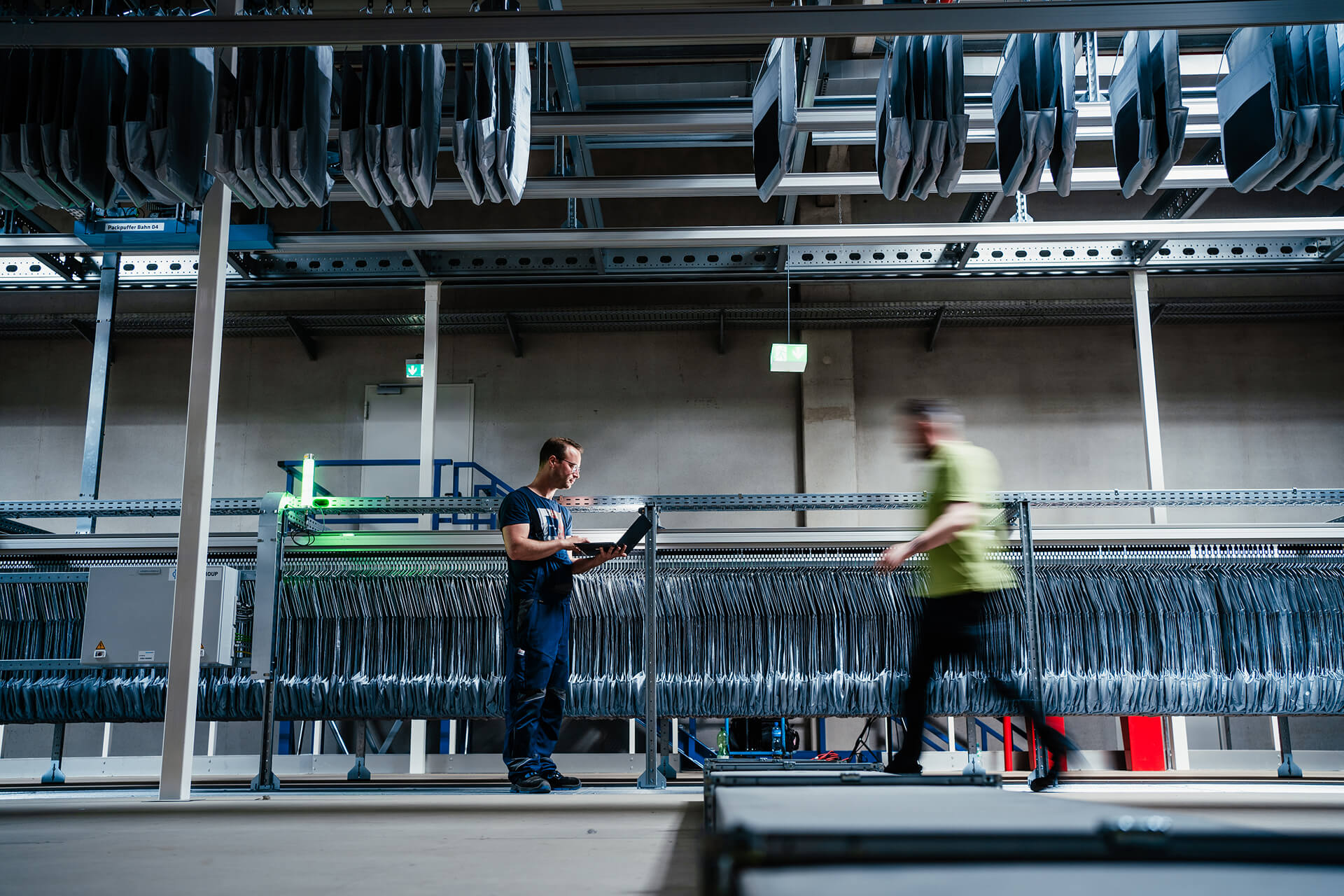
Turn returns into available stock.
- Received
Recorded and assigned
- Inspected
Suitability for resale assessed
- Available again
Put away and stock reported
Illustrative example · For goods suitable for resale
The process landscape
Growth takes coordination.
From order to return.
Store replenishment, online orders or B2B orders: integrated logistics brings your channels’ requirements together in coordinated processes. Explore what matters at each of the six stages.
Your sales channels
- Stores / Retail
- Online shop
- Marketplaces
- B2B / Wholesale
- Social Commerce
The solution: integrated logistics
Select a stage to explore requirements, measures and relevant solutions.
∞One stock pool. Every channel.
Make stock visible and coordinate how it is used across channels and locations.
What it involves
What omnichannel changes
With several sales channels, it matters which products are available where and which orders they can fulfil. A shared view can connect stock in warehouses and stores. Reservations, product requirements and agreed release rules determine which stock can be used across channels.
What to measure
- How closely does recorded stock match the stock physically available?
- How long does it take for stock changes to be reflected in connected channels?
- Are reservations, blocked stock and stock releases traceable across connected locations?
Stock and order information need to stay aligned at every stage. Explore order intake →
01Order intake & allocation
Match stock and orders so that your delivery promises reflect available stock and the location fulfilling each order. This matching process is called allocation.
What it involves
What omnichannel changes
Orders from different sales channels have their own availability and lead-time requirements. Shared stock information and clear rules for reservations, site selection and prioritisation provide the foundation for coordinating these orders.
What to measure
- What proportion of confirmed orders is cancelled because stock is unavailable?
- What proportion of orders requires manual intervention to clarify stock or site allocation?
- Are reservation and prioritisation rules clearly documented and traceable?
The rest of the supply chain needs to deliver on the promises made here. Explore picking →
02Picking & packing
Pallets, cartons or individual items: picking and packing depend on order size, the product and the recipient’s requirements.
Foundations & processes
What omnichannel changes
Store replenishment, B2B orders and online orders differ in pick quantities, sorting and packaging. A coordinated operation accounts for this mix when planning pick routes, packing stations and capacity. Deliveries sorted for a particular store are planned alongside individual parcels.
What to measure
- How many picking errors occur per 1,000 order lines during normal and peak operations?
- What proportion of orders requires rework because packaging or sorting does not meet agreed specifications?
- Are picking units, sorting and packaging defined for each order type?
Channel-specific services are coordinated with picking and packing. Explore Value Added Services →
03Value Added Services
Product sets, displays, labels and personalisation prepare goods for the requirements of each sales channel.
What it involves
What omnichannel changes
Different channels require different product preparation: promotional sets, labels that meet a retailer’s specifications or a sales display, for example. Processing is timed around stock, order volumes and dispatch planning. Assigning goods to a channel later can keep stock flexible for longer, where products and processes allow.
What to measure
- How long do comparable additional services take from order release to completion?
- What proportion of orders meets agreed specifications without rework?
- Are processing schedules and current product and channel specifications agreed and documented?
The right processing schedule supports both flexible stock use and delivery readiness. Explore the shared foundation →
04Dispatch & loading
Prepare and load completed orders, then hand them over for transport at the agreed time.
What it involves
What omnichannel changes
Parcel shipments, store replenishment and B2B deliveries have different cut-off times, shipping data and loading requirements. Dispatch management aligns order preparation, documents and collection times accordingly. Released orders need to reach the relevant transport partner in full and on time.
What to measure
- What proportion of orders received and released by the agreed cut-off is handed over for transport on time?
- How often are handovers delayed by missing documents, labels or shipping data?
- Are collection times, handover requirements and responsibilities agreed for each shipment type?
After loading, the next milestone is handover to the recipient. Explore transport & delivery →
05Transport & delivery
From the dispatch location to the agreed delivery point: transport and delivery connect your delivery promise with the recipient.
What it involves
What omnichannel changes
A doorstep, a store loading bay and a business customer’s goods-in area have different requirements for vehicles, delivery windows and handovers. Suitable transport routes and available status information support delivery planning and communication when things change.
What to measure
- What proportion of deliveries reaches the recipient in full and within the confirmed delivery window?
- For what proportion of late deliveries is the delay reported before the confirmed delivery window ends?
- Are responsibilities and communication routes for delivery exceptions clear for each channel?
The return journey is part of the delivery service too. Explore returns →
06Returns & restocking
Inspect returned products, decide what happens next and make suitable goods available for sale again.
What it involves
What omnichannel changes
Return routes and product condition vary by business model and channel. The process connects inspection with a decision on resale, reconditioning or another agreed route. For products suitable for resale, the key is when and in which channels they become available again.
What to measure
- For products approved for resale, how long does it take from receipt of the return until they are available to order again?
- What proportion of these products becomes available again within the agreed processing time?
- Are the condition, processing decision and stock status of each return documented and traceable?
Updating stock after inspection and release creates new opportunities to sell. Back to stock →
2aGoods receipt
Arrival, receipt and inspection provide the foundation for reliable stock records.
What it involves
What omnichannel changes
Goods in a single delivery may be intended for different order types and channels. Product data, picking units and required checks therefore need to be considered at goods receipt. Stock booking shows which quantities are available after inspection and release.
What to measure
- What proportion of deliveries differs in quantity or product from the advance shipping notice?
- How long does it take from arrival until stock is booked, released and available?
- Are inspection and release rules defined for each product’s requirements?
Returns also begin with goods receipt. Back to stage 2 →
2bPutaway
Plan storage locations and replenishment to match your product range, picking units and demand.
What it involves
What omnichannel changes
Depending on the order, full pallets, cartons or individual items are picked. Storage and replenishment strategies account for these quantities, as well as pick frequency and available capacity. Automation is planned where the product range, volumes and processes are a suitable match.
What to measure
- How often are picks interrupted because stock has not been replenished at the pick location?
- How long does putaway take from released goods receipt to confirmation of the storage location?
- Is the storage strategy regularly adapted to demand and the order mix?
Well-planned putaway makes the next pick easier. Back to stage 2 →
In practice
New ways to reach customers.
Made possible together.
FIEGE combines operational experience with the development of tailored logistics solutions. Explore how we support our customers in practice.
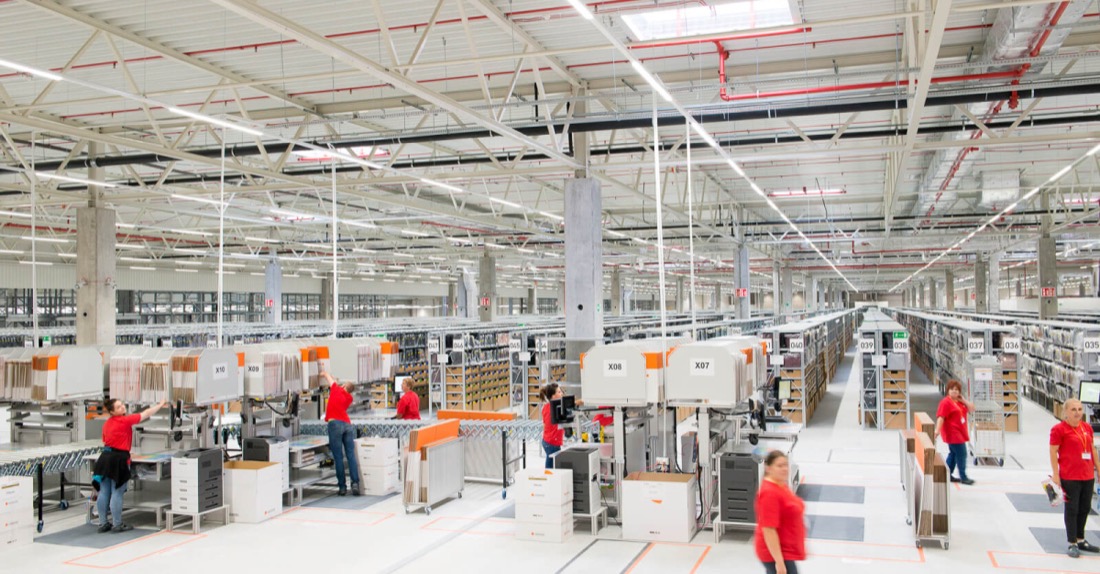
Zalando / Fashion fulfilment
Complexity needs well-coordinated processes.
Depending on the location, FIEGE supports Zalando with e-commerce fulfilment, returns management, transport and other services. Together, they have expanded logistics operations for European markets.
Read success story
asellerate / Digital commerce
Opening up new sales channels together.
FIEGE helped asellerate establish a fulfilment hub. The partnership covers everything from product photography and fulfilment to returns inspection and restocking.
Read success story
Kapten & Son / Lifestyle & E-Commerce
Growing with the business. Delivering across Europe.
Since 2020, FIEGE has handled storage, fulfilment and returns management for almost all of Kapten & Son’s product groups. The lifestyle products are shipped across Europe from Ibbenbüren.
Read success storyQuick insights
Omnichannel in practice.
One short video at a time.
Videos in German.
B2B
Watch on YouTube
Retail
Watch on YouTube
Online Shop
Watch on YouTube
Marketplaces
Watch on YouTube
Social Commerce
Watch on YouTubeSelecting “Load video” loads content from YouTube and transfers data to Google. Google’s privacy policy applies.
The right questions to ask
What to know
before taking
the next step.
A good partnership starts with clarity. That includes requirements, effort and limitations.
What is omnichannel logistics?
Omnichannel logistics connects the logistics operations for stores, online shops, marketplaces and other sales channels. The aim is a shared view of available inventory and coordinated processes from order to return. Packaging, labels and delivery windows depend on the individual order.
Can one operation handle store replenishment and e-commerce fulfilment?
Yes, if the operation can handle both order types: picking organised for efficient shelf replenishment in stores, and individual item picking with parcel dispatch for the online shop. This requires reliable inventory data, suitable processes and agreed prioritisation rules. Which stock can be shared depends on the product range and the requirements of each channel.
What does shared inventory require?
Shared inventory means coordinating the visibility and use of available goods, including across multiple warehouses or stores. It requires accurate inventory management, consistent master data, working interfaces and clear rules for reservation and allocation. Returns are recorded as available stock again after inspection and approval. The effort and benefits depend on the starting point, product range and channel mix.
How quickly can another channel be connected?
The timeline depends on data quality, interfaces and the requirements of the new channel. The launch includes testing orders, inventory, labels, packaging and returns, along with an agreed ramp-up in volumes. A reliable schedule can be established once these requirements have been assessed.
When is automation the right solution?
Automation should suit the product range, baseline demand, peak volumes and planning horizon. Highly variable volumes, a diverse range of items or processes that are not yet stable may make manual or semi-automated solutions more suitable. What matters is the cost-effectiveness of the overall operation.
How can a transition be managed while operations continue?
A transition needs a suitable time window, tested data and interfaces, and clear responsibilities. A phased launch can reduce risk. Both parties should agree in advance which performance targets must be met before further volumes or channels are transferred.
Talk to FIEGE
What are your logistics priorities? Let’s talk.
Whether you want to improve existing processes or meet new requirements, we can review your situation together and explore possible next steps.
What we can discuss
- What matters most in your logistics right now
- Which processes and requirements need to be considered
- What you would like to improve
Tell us what you need.
We will get in touch to discuss the next steps.
The contact form is loading.